Tuesday, October 8, 2013

C4T #2

Comment #1:
group of teachers discussing material

     I was assigned to J F Hadley's blog for my second C4T.  Her article, Educator's Care, talked about the importance of uniting together as educators to help one another.  She mentioned at the BAMMY Awards in Washington DC there were awards given to teachers for their accomplishments over others.  She didn't believe in pinning one teacher against the other, but that we should be open to helping one another for our students sake.  She mentioned while in Washington DC for this awards thing, she set up a get together for teachers to communicate and discuss the benefits and challenges of being a connected educator.  Apparently some of these educators had only ever met online, so they were thrilled to be able to sit down to a face-to-face conversation.
 
     I thanked her for bringing the importance of other teachers to my attention.  I was focusing so much on becoming a teacher that I forgot how difficult it will be at times.  Her blog helped me realize I need to surround myself with supportive educators once I start teaching.

Comment #2:
the book Role Reversal: Achieving Uncommonly Excellent Results in the Student Centered Classroom

     J F Hadley's second blog post was title, It's Official! I'm an Addict!  She was raving about a book she read, Role Reversal: Achieving Uncommonly Excellent Results in the Student Centered Classroom by Mark Barnes.  Mrs. Hadley was talking about how immediately after reading this book she changed her lesson plans for the next week.  She worked on gathering a project to get her students more interested in history, but her teaching materials fell short.

     I commented thanking her for sharing this.  I have been a little scared with not being totally prepared in my lessons, and she showed that you have to be willing to change things. Be flexible!  I also told her she inspired me, as a future history teacher, and gave me some ideas to use with my teaching.

Sunday, October 6, 2013

Project #13

Writing A Lesson Plan For A Project
The Lesson Plans for my project is in the link above.  These Lesson Plans focus on teaching students how to find true, factual research as well as how to make a proper presentation.  This specific Lesson Plan is intended for an 11th grade classroom but could vary for the different high school grade levels. Due to the length of the assigned paper and presentation they are to get ready for they will be allotted 10 hours over the span of a week to use the school computers and iPads.  Hopefully this will teach students the proper way of researching and presenting a project.

Blog Assignment #7

screen shot of Anthony Capps and Dr. Strange

Erin Crane, Lance Wilkinson, and Wesley Etheridge:
In the 21st century, more professionals in the field of education are seeing the impact Project Based Learning can have on the educational process. According to Anthony Capps in his discussions with Dr. Strange, Project Based Learning can reach its apex when the students authentically receive the project. This authenticity can be achieved by capturing student interest.

In the video discussion, Mr. Capps encouraged Project Based Learning through an assignment for his 3rd Grade students to write a letter to Congressman Joe Bonner. What is most interesting, as well as unconventional, is that Mr. Capps encouraged the students to peer edit each others’ writing and then choose themselves which eight were the best. This is collaboration at its finest because it was the students selecting which letters were the best and not the teacher. There seems to be something very Democratic about Project Based Learning.

Project Based Learning also exercises practical ACCRS and Common Core standards. In their letters to Joe Bonner, Mr. Capps’ students were actually practicing extremely relevant reading and writing skills.

Mr. Capps also encouraged the use of Icurio due to its mass amount of content. In addition, Icurio is a search engine for a mass amount of Filtered Media. This makes Icurio an ideal safe engine for students to use. Icurio is perfect to be in used in conjunction with Project Based Learning because it provides a safe place for students to research and gather material for their projects. Discover Education works very much in the same way, but focuses on digital mediums of learning rather than research.

Overall, the video discussions between Mr. Capps and Dr. Strange prove that students desire an interactive learning environment. More so, when teachers give students an interactive environment, the students become more involved than ever. An interactive and engaging learning environment starts with interactivity, Project Based Learning, and an availability of the tools necessary to achieve these new methods of Education such as Icurio and Discovery Ed.


Erin Crane: "Strange List of Tips For Teachers"
In the video, The Anthony-Strange Tips for Teachers, Anthony Capps and Dr. John Strange gave tips for beginning teachers to remember.  Anthony, a former EDM 310 student and well respected third grade teacher, and Dr. Strange imparted six “tips of wisdom” (as I like to call it) upon those who watched the video.  The list consisted of:
  1. Be interested in learning.
  2. Be ready to put in the hard work.
  3. Be flexible with the way you teach.
  4. Always start with a goal.
  5. Engage your students 100% of the time.
  6. Reflect,revise, share, and work with an audience.

A couple of these seemed like common sense advice, but it hit me that I hadn’t really thought of it.  I have always been a believer in the “you get as much effort as you put in” method so I understood the hard work tip.  The first piece of advice given, be interested in learning, put me at ease.  I’ve always had a fear of not remembering or knowing enough information to teach my students, but I realize I will have to teach myself new curriculum every day.  History is something that doesn’t change, but at the same time is constantly changing.  Everyday a new event will happen that I can compare to a past event in history, hence, “history repeats itself”.  As I get older I also realize my students may also start teaching me things, which is fine, it means they’re learning!  Another tip I liked was to be flexible with the way you teach.  I realize every class is different from the next, and some things I use in one I won’t be able to use in the others.  Having a plan set out is great, but I need to learn to be flexible to roll with whatever happens.  We may get on a topic the kids have a lot of questions about, and I won’t cover the rest of my lesson plans for the day.  I’ll have to make that up at some point in the week.  Flexibility is a great word for teachers to remember, as well as the tips given to us in this video.


Lance Wilkinson: “Don’t Teach Technology, Use It”
The video conversation between Anthony Capps and Dr. Strange “Don’t Teach Technology, Use It” focuses on the opinion that students should be familiarized and learn to apply technology through Project Based Learning. This belief is founded on the fact that technology will become immensely more prevalent during our future students’ lives, therefore technology should be a medium of the learning process.


According to Mr. Capps, technology is advantageous to learning because it is clean and sharable. A huge part of education, as well as technology is sharing. Therefore it would make sense that the two be combined. Technology also excites students and makes educational material seem more relevant to their daily lives.


By applying technology to Project Based Learning, students not only learn the material, but also become more familiar with technology through the project. Implementing technology into the classroom through Project Based Learning also teaches students problem solving skills. In addition, technology should be implemented gradually to familiarize students with technological mediums in order to build week by week on technological familiarity.


The main thesis of the video rests on having students engage in Project Based Learning by applying technology, rather than merely teaching technological applications to students. In this way students can apply what they’ve learned in the project’s subject and familiarize themselves with technology in an interactive and engaging learning process.


Wesley Etheridge: “Additional Thought About Lessons”
In the video, Additional Thoughts About Lesson, Anthony Capps explains that a lesson is 4 layers thick. The first "layer" of developing a lesson is thinking about how the lesson fits into your plan in terms of the entire year. This requires deciding if you are going to cover all of your content standards, and then writing out a curriculum map that ensures all of the standards are covered during the course of the year. The next layer is the unit. According to Anthony Capps it is vital that the unit is planned in a cohesive manor that ensures each unit sets up the next. This assures that you don't force students to learn everything about one particular unit in one day. Rather than forcing students to learn everything in a short amount of time, you plan a certain point in time where the students should be able to master the outcome. The third layer, so to speak, is planning your week. This entails having a goal for each week, and asking yourself what will you do each day to achieve that goal at weeks end. The fourth and final layer is the daily plan. The daily plan is how you engage students on a daily basis. Anthony says you start with a hook that gets the students engaged and then by the end of the day you use something to actually measure what they have discovered. You then take those measurements to plan your next day. Anthony Capps is clear to point out that it doesn't matter which layer you start with, but all four layers are equally important in having a successful lesson.

In this short video I learned a lot about a lesson. I agree with Anthony that all four layers are important, but the part that grabbed my attention the most was his comment on the importance of having a hook that engages students on the daily level. I would love to hear him discuss examples of hooks in the future with Dr. Strange.  

Saturday, October 5, 2013

PLN Project #2-first progress report

     My PLN so far has been very informative.  I'm finding all these new things to incorporate in my classroom.  I chose Symbaloo to help me keep everything in order.  So far I only have ten tiles on my board, but they are websites I use often and will continue to use when I get to be a teacher.  Amongst the ten tiles I have included my personal blog and the class blog.  The class blog gives me easy access to all the students and educators connected to it, and my personal blog as well has a few of the students comments on there.  The class blog also has links to other educational media sites I can use.  I also included a tile on iCurio for the same reason.  I included my Gmail and Twitter tiles in there to keep up with other educators around the globe, even though I don't have many on there at the moment.  Youtube is probably the most useful tile I have on my Symbaloo as of now because once I watch one educational video another one will catch my eye in the suggestion box.  Once that happens its just a downward spiral and before I know it I've found ten different educator vlogs that I keep up with.  I have USA, Padlet, and Google Drive tiles up there as well for easy access.  I added the History Channel to my board as well.  As a history teacher I will be able to pull this up for quick informational tools and videos.  They also have a "What happened today" section and I can have that up for the students to see when they come in the classroom.  So far this is all I have developed on my PLN.

Degas Podcast Project #9

Monday, September 30, 2013

C4K Summary for September

Week 4
     I was assigned a wonderful student's blog post titled "Equality For All".  I commended the student for being so young and standing up for a strong belief for marriage equality.  That subject is not taken well in today's world, much less living in the south.  I supported her by saying my friends and I believe in equality for all people.  In her post she used a close friend at her old school who blurred the lines of fashion as her way of saying "People should not be treated differently for who they are but how they treat others.  This I believe; in equality for all".  I told her that gave it a more personal touch than just another person ranting about equality.  I summed my comment up by saying she caught my attention and held it, which is a sign of a good writer or blogger.  I left a comment asking if she likes to write or act (her voice recording had a lot of personality) and I hope to hear back from her!

Week 5
     This week I was assigned to Billon's blog!  His topic on "Being Teacher and Principal For A Day" made me smile!  Reading about all the sports and games he wanted to play with his students all day made me reminisce about the days when I wished I could change school too.  It hit me when writing a comment that in a few years I will be the teacher. I will be the one in charge.  I will be the one to make a change for these students.  I asked him if he would teach me some of the games he listed I had never heard of.  I also warned him Redrover Crossover was my favorite, and I was pretty good so watch out!  He asked his readers what they would do if they could be teacher for a day so I responded by telling him I would like to use movies to help my students learn.  I asked if he would like that as a student, hopefully he approves!

Week 6
     I had the pleasure of visiting Simon's blog this week!  Simon told us about what they did in class on Tuesday, September 17.  The kids are learning the story about Esther but have stopped for the day on a sad note.  Simon told how into the story he was but was worried what was to come.  I shared with Simon that my favorite biblical story was Esther and that the story ended well.

Week 7
     I got to visit Ashley's blog this week, and her post was very inciteful!  Ashley's blog post was titled Do Birds Get Shocked When They Sit On Wires?.  I commended her on teaching me something!  I must admit I too have wondered why birds do not get shocked while resting on electrical wires.  Ashley told us that birds do not get shocked because they are not good heat conductors.  I thanked her for teaching me something!

"


Wednesday, September 25, 2013

Blog Assignment #6

What questions do we ask?  How do we ask?
purple question marks
     Questions play a huge part in a student's learning.  It expands their vocabulary, develops critical thinking skills, and challenges their thought processes.  As a teacher we are responsible for making sure we help our student develop by challenging them.  One way to do that is to ask thought provoking questions in your classroom.  I read an article, Three Ways to Ask Better Questions in the Classroom, and it got me thinking on how I can evolve my questions to better challenge my students.

     As a history teacher there will be a plethora of topics my classes can discuss, but it's up to me to help lead and further the discussion.  One way is to make sure I ask open-ended questions.  If I ask a yes or no answer it will stop right there; I need to make sure I word my questions in a way that leads them to expound with their answer.  If I prepare my questions ahead of time that should take care of any unnecessary stumbling across words, which in turn could confuse your students.  By continuously asking questions to their answers I hope to bring more students into the discussion.  With history being heavily opinionated, I feel there is no reason that I can't keep a discussion brewing for a while.

     After reading various different articles I have come up with another way to use questions in my classroom.  I will issue a question in class that the students must go home and use Padlet, Google Documents, or another source of my choosing to answer.  I'll require there to be statements to back up their answers.  This way they learn to use the internet as a resource instead of having me give them all the answers, and by taking it home they have more time to think on the question.  The next day i'll discuss the few interesting ones, and if there is a correct answer I will give it and use it to continue to the next lesson.  Also, in the same manner, I will use any good questions asked by the students themselves.  If a student brings up a good question that has potential for a good discussion I might assign it as bonus points to be turned in via the internet.  That way the student will get their answer and my lesson plans won't be thrown off too much.  I realize teachers schedules change constantly, but in a history class if I made a discussion of every single question asked, we wouldn't cover all of the material.  I will change up the ways in which I handle questions asked in my classroom.


Saturday, September 14, 2013

Blog Assignment #4

recording the script
        Podcasts are an excellent way of getting your students more excited about learning.  In Langwitches blog post, 1st Graders Create Their Own Read-Along Audiobook, they talk about partnering with a fellow 1st grade teacher to help students prepare their own audiobook.  They created a script for the students to read off of and one teacher took three at a time to record, while the other teacher read the rest of the chapters of Dinosaurs Before Dark to the remaining students.  Once the audiobook was completed, they printed off the script so their students could follow along with their voices on the podcast.  They said the students were eager to get their voices just right by changing up their speed, emotions, and inflection.  Then in the article, Flat Stanley Podcast, another group of students in the same school was influenced by the previous class.  They sent Flat Stanley's all around the world and received notes and pictures back.  The children then chose a place they would've wanted to been mailed to and wrote a short script describing the adventure.  When they recorded the podcast they were to use their voice to help describe the smell of the place they went, what it felt like to be mailed, and the sounds they heard.  I noticed that by using this technology the children seemed to be more eager to read, write, do research, and learn about new places just so they could record it.  As a high school history teacher my kids won't be reading children's book, but it might spark in them to do a vocal reenactment of a part of one of the wars in history or a famous speech they liked.
     
     After reading Benefit of Podcasting in the Classroom, I started thinking of ways I could gain from podcasting as a teacher.  I already said things my students can do, but ways I might can use it I had never thought of.  On days in advance that I know I will be absent from classes I can podcast the students notes and leave a little quiz for the substitute to hand out.  That way we aren't behind on our syllabus and can keep to a schedule that will allow for more projects (less lecturing).
  

Thursday, September 12, 2013

C4T #1


Comment #1:
 
Google Scan being used on a written document

     I had the pleasure of visiting Eric Langhorst's teaching blog and his first post, titled Work Flow- Getting Traditional with Google Scan Feature, got my brain spinning with ideas. First off, in the post, he talks about being torn between wanting to keep a digital copy of his notes when he goes off to seminars and conventions and enjoying the ease of a simple notepad and pen to write freely and draw his tables and charts with no complications.  A notepad fits easily into his pocket and doesn't create the awkward complication of carrying around a laptop or iPad tablet.  He was able to merge the two when he found a SCAN app located in Google Drive that allows you to take a snapshot, "SCAN", a document and it can be cropped and changed to black and white or color setting and it is uploaded to your Google Drive documents.  It can also have a title and is searchable amongst your other items.

     I commented to him that I had been up and down on whether to purchase an iPad because I already own a laptop and smartphone.  I told him by reading this article he helped solidify my decision to purchase one before starting my teaching position.  It's more portable and knowing I can make a scan of anything I may not put on the tablet just gives me all the more reason to go do a little shopping for a certain purchase!

Comment #2:
tombstone of Elmer D Lauck
     
     Mr. Langhorst has not gotten the chance to write a newer blog from the above post so I ventured further down and found the next post, Connecting the Story- Honoring Elmer D Lauck,Vietnam Veteran.  As a history buff I very much enjoyed this post!  He was talking about a trip he took to Washington DC and their tour around the Vietnam Memorial (i've been, it's breathtaking).  Eric Langhorst said he personally did not have a relatives name on the wall but a lady that was travelling with their group said her first cousin's name was on the wall.  Using a phone app they have, they were able to locate the name.  He asked Leann more about her cousin and found out he was buried where his wife's family lives, and he also was going to be flying back there after the trip.  Once he arrived in Wyoming he was able to locate the grave.  He took some pictures for Leann and her family and left a red carnation and flag in remembrance.

    I commented on the fact of how neat it was to see a personal connection with a name on the wall.  I have visited Washington DC and seeing these memorials are always really moving, but it doesn't hit you in a way that it would if you knew someone personally who was listed on that wall.  I commended him on how he helped connect her after the trip with pictures of the grave site and by placing a flower and a flag to honour him.    

Sunday, September 8, 2013

Blog Assignment #3

   
student crying from a severely critiqued paper
After watching What is Peer Editing? and Writing Peer Review Top 10 Mistakes, and also reviewing Peer Edit With Perfection Tutorial, I have come to realize I may be taking the easy route with my comments.  My first comment I made on a students blog had light criticism, which I thought was the assignment, and then I noticed no one else was giving anything other than comments.  Let's face it, no one wants to be the "Mean Margaret" and makes things awkward.  I feel like these materials contained things I already knew, but had since forgotten.  Teachers start slamming peer editing into your brain in middle school and I think by the time you have gotten out of high school most students have slacked off here and there.  I am one of them!  This was a reminder to not be afraid of giving positive criticism to help others and also to look for grammatical errors.  I'll be honest, I haven't been looking for those!
     After this revelation I went back and reviewed my group member's blogs, and although I couldn't find anything wrong with them this time I'm sure i'll be more aware of things from now on.  If the criticism isn't too harsh I have no problem with throwing it in with a few compliments publicly, however, if something comes to my attention that might be better said privately I have no issues with that.  My job as a teacher isn't to embarrass a student, I am there to educate!  I feel a student will be more responsive and open to you if you have their trust, and you won't get that by calling them out in front of their friends.

Sunday, September 1, 2013

Blog Assignment #2

Screenshot of the Professor Dance-a-lot video

Erin Crane, Lance Wilkinson, Wesley Etheridge: Professor Dance-a-lot
The video on Professor Dance-a-lot reflects the sentiment of “burp-back education”. Professor Dance-a-lot merely showed the students how to do something by lecture, when it would have been much more effective to have them engage themselves. The students didn’t really learn how to dance, because they never had to try. The point of the video is that in the future of the education we want to engage the students, not merely lecture at them. In this way teachers and students will both become more effective learners and leaders.


Erin Crane: Harness Your Students’ Digital Smarts
Edutopia, an educational sources website, has a video detailing Vickie Davis’ unique way of using media tools to connect her students to learning.  Vickie is an innovative teacher in Camilla, Georgia that has taken it upon herself to use games, blogs, wikis, and virtual worlds to ignite a want in her students.  Mrs. Davis herself has won an award for best teacher blog in the world.  She has traveled around the country talking about the techniques she is using but her passion remains in the classroom with her students.  As a “teacherpreneur” she has taught her students new software, to learn how to learn, how to use the Wiki, and how to collaborate with other students more effectively.
Mrs. Davis has collaborated with Julie Lindsey, a teacher in Qatar, to form a global collaborative project they named Digi Teen.  Students all over the globe have come together studying digital citizenship by researching and posting their finding through two digital portals!  Along with Digi Teen the two teachers have also founded another project.  Flat Classroom Project is a project that lets students experience trends in information technology by writing reports with other students and creating videos.  She has even travelled with some of her students to the Middle East for a conference for the Flat Classroom Project.  Vickie Davis made a statement at the end of the video that stuck with me.  She said, “I believe this whole idea of turning school upside down and empowering students to share with one another.  If you can empower them you are just going to have a better classroom.”

Wesley Etheridge: Teaching in the 21st Century
Kevin Roberts made it clear that teachers in the 21st century will have to stop simply providing content, dates, facts, and formula’s. Teachers are no longer the source of information; instead we are the filter between the students and information they have access to learn on their own. Roberts nailed this point by listing all the things students can use to learn on their own. Resources such as blogs, Google, cell phones, Twitter, Wikipedia, and YouTube are available to the majority of students in America.
What does it mean to be a filter? Kevin Roberts asks the question, “How do we teach students to handle their resources?” Being a filter means that we show our students how to use the resources made available to them. Teachers in the 21st century must show students how to validate, synthesize, leverage, communicate, and collaborate information. Roberts poses another important question, with all of this information available should our curriculum be focused on facts and content, or skills? If students can learn facts on their own, it’s clear we should focus on the skills needed.
I honestly don’t disagree with anything Kevin Roberts stated. I think he’s correct, and I think it means we need to focus on engaging students rather than entertaining students. Engaging students begins with the teacher. As teachers we need make sure we’re doing anything it takes to keep our students engaged at all times. Rather it be through collaborating with fellow students or utilizing questions that challenge students to solve problems online, the focus needs to be on engaging students. If Roberts is correct the challenge for me will be to take risks. Instead of making assumptions that my students won’t be successful learning facts on their own, I want to try different methods and see what happens.

Lance Wilkinson: The Networked Student
The educational theory and practice known as Connectivism puts emphasis on networking and interactive learning rather than on traditional educational mediums , lecture and readings. The Networked Student video (created by Wendy Drexler) also puts emphasis on the role of technology in the future of the educational field. The Thesis of the video claims that Connectivism is the way of the future for education. Furthermore, the video reassesses the role of the teacher as a guide for the learning process.
The example student in the video was shown to have taken very well to Connectivism. The student networked with other students studying his subject of interest, subscribed to Podcasts to watch classes around the world, and started blogging to discuss subjectively his area of interests with other students, as well as muse on his subject in his personal blog. It is argued in the video that this is the way of the future for education. The student only went to class three days a week and didn’t even have a book!
Connectivism will definitely be a major aspect of the educational field in the future. What a wonderful resource the internet and technology are! However, putting too much emphasis on networking can either take away or dramatically add to the academic discipline being studied. The video assumes every student will do what is necessary to be a self-learner and take the time and effort to network. In the school system today, some students refuse to even do short reading assignments. Therefore it is impossible to assume every student will actively participate in Connectivism. However, this should not dissuade anyone from the value of Connectivism. I believe the ideal is to continue our push towards Connectivism without completely throwing off lecture and readings. In this way students will both learn from valuable resources (books, academic articles, journals), and network what they’ve learned online; making Connectivism even more valuable. Students could refer each other to academic sources and books that they’ve read and discuss themes or ideas from these reading assignments.
The video asked: “In the future, why even have a teacher?”. The video argues that the teachers role is to be a guide for networking. This is a crucial element of our educational system because networking is such a major part of our modern society. I believe the teachers role is to actively participate in the learning process by lecturing and assigning relevant readings, but also to encourage networking and Connectivism. In this way our future students will be competent, educated, networking individuals.


Sunday, August 25, 2013

Blog Assignment #1

     In this assignment we were given two articles to read and to inspire us for our own ideas.  Krissy Venosdale's blog post, titled If I Built A School, contained some extremely creative ideas for igniting the drive to learn in students.  After reading about a big treehouse in the library I was 100% sold and ready to hand in my resume! Sugata Mitra's talk, Build a School in the Cloud, was so inspiring.  I immediately began examining the way I could structure my future classroom to build around these principles and ideas he has discovered through experiments and observations.
     My ideal school or classroom would be kind of simple but very effective. I would be teaching high school teenagers and the course subject would be American History.  I have always felt student learn better with hands on material or submerging themselves in the moment.  So with that in mind, let's move on to the rest!
What do you want your students to know? 
As a History teacher I would want my students to know how this country came to be and the trouble we went through to get it founded! I feel like that would give them a better perspective and respect for this land. Also, although this crosses into political science, I would want to give them a brief synopsis on how the government works since the age I will be teaching will be eligible for voting rights in the coming years.
What do you want your students to be able to do?
I want them to learn to formulate their own opinions based off the material they read.  History is basically one person's point of view and opinion passed down through the years which does not always make it the most accurate.  The students ability to be able to dig into the authors background will help them see things more clearly and hopefully help them form a clear judgement of their own.  Also by learning this I feel it will help them later on when they have to form opinions on religion, politics, and other decisions in their life.
What will be your primary way of teaching your students what you want them to know and 
to do? What tools will you use in your classroom?
There are so many things you can use to teach American History but you have to be careful you are giving them the most accurate information.  I want to help them learn the same way history became interesting to me.  It all "clicked" for me when I was at the Beauvoir.  Seeing the places where history was made helped me get a better grasp of it.  Since then going to places like the Battleship in Mobile, World War 2 Museum in New Orleans, and many places in Washington D.C have helped further that love into a full blown passion.  By taking these kids to the places where these historical events occurred or bringing them to life through the internet with interactive websites or movies I feel they would feel apart of the event instead of a spectator.  I would also incorporate some group projects that would force them to dig for material and use each other to better understand.
What role will students play in your classroom, i.e. how will they participate in the 
learning process?
Well like I have stated before, they will be working together to do group projects.  Some of the projects will be about events involving different wars and some about a person they will have to research.  I might have them dress the part and act out scenes, by doing this I feel kids will pay better attention to the details. Also I'm a firm believer that kids listen to their peers more than adults so I will be incorporating their own to help me teach these students!
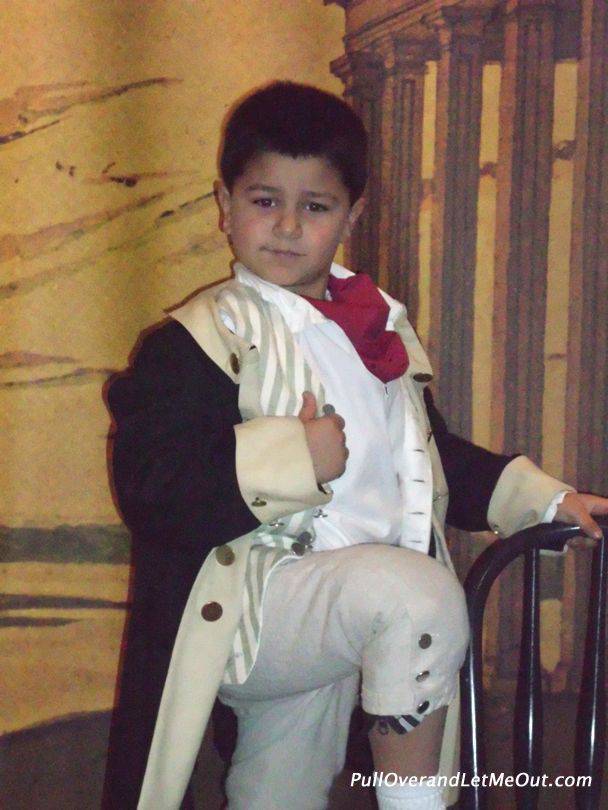
kid dressed up as George Washington

Thursday, August 22, 2013

Practice Blog Post

      Hi my name is Erin and I am a Junior at the University of South Alabama. I currently reside in Moss Point, Mississippi but I have lived in many places. I attended college in North Carolina before transferring. I have worked in numerous jobs but my favorite was when I worked a semester at Walt Disney World! Working there and trekking the Himalayan Mountains are probably the most favorite moments of my life! A few things I am passionate about are my God, friends, family, my dogs, and of course whatever crazy dream I happen to be pursuing at the time. Right now that would be a degree in education.
      Teaching has always been a passion of mine no matter the subject. I love teenagers and their vulnerability, it seems to make them more open to hearing what you have to say. History is also a passion of mine so putting those together just made sense when figuring out what to do with my life. My parents are also educators and seeing the amount of time they had to spend with my brother and I was important to me if I was to ever start a family. I am currently a substitute at the high schools in Jackson County, MS and it’s only solidified my career choice!


My Test Post 2

Testing one, two

Wednesday, August 21, 2013

My Test Post Title

This is my First Post. I clicked the HTML button which I should always do in EDM310. I am now a Blogger!